
India’s women’s cricket team opened the country’s gold-medal account at the Asian Games 2026 in emphatic fashion. In the final at Korogi Sports Park in Nisshin on 22 September, India posted 216 for 3, the highest total in the history of women’s cricket at the Asian Games, and then bowled Sri Lanka out for just 69 to win by 147 runs. The victory secured a second consecutive Asian Games gold in the event and set the tone for an excellent campaign for the Indian contingent in Japan.
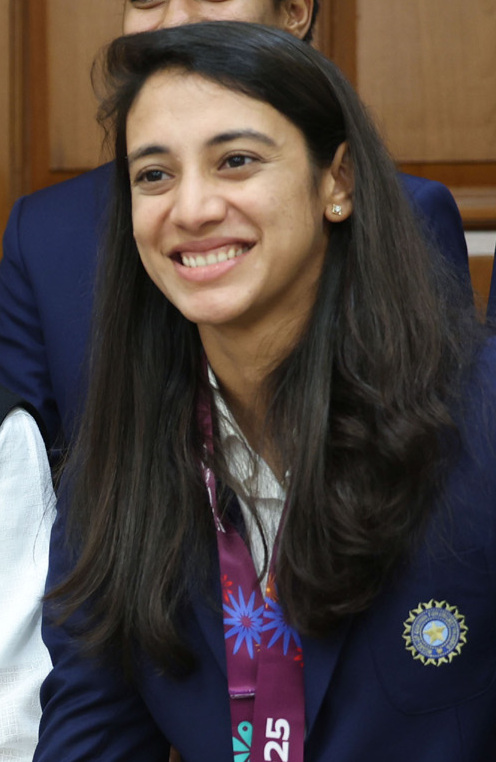
India’s batting: a record-setting innings
The foundation was laid by the openers. Smriti Mandhana and Shafali Verma put on 99 runs for the first wicket in 60 balls, and India were 59 without loss after six overs. Sri Lanka’s bowling and fielding were loose, and their spinners struggled to find control against an opening pair that was in no mood to let the innings drift.
Mandhana was the star, scoring 79 off 45 balls with seven sixes and five fours. Shafali contributed 48 off 29 balls. Richa Ghosh then finished the innings with an unbeaten 49 off 22 balls in the closing overs, while captain Harmanpreet Kaur made 19 off 17 and Bharti Fulmali added 7 off 7. Together they took India to 216 for 3, which beat Hong Kong’s 202 for 4 from the 2023 Hangzhou Games as the highest total in women’s Asian Games cricket. It also passed the previous best total of 210 in a women’s T20 final.
A milestone for Mandhana
Two reports, from Morung Express and Onmanorama, state that Mandhana became the first woman cricketer to reach 11,000 international runs during the innings. It is a notable landmark, and it adds to the sense that she is the batting leader of this generation of Indian women’s cricket. The runs came in a gold-medal final under pressure, which makes the milestone feel more meaningful than one achieved in a bilateral series.
The bowling: Sri Lanka bowled out for 69
Sri Lanka needed a record 217 to win, a target that looked far beyond them almost from the start of the chase. They were all out for 69 in 15.4 overs. Chamari Athapaththu, the Sri Lankan captain, top-scored with 29 off 21 balls, and Kaushani Nuthyangana made 14 off 14, but there was little other resistance.
Deepti Sharma was the pick of India’s bowlers with 3 wickets for 6 runs, according to the Deccan Chronicle and Onmanorama. Shafali Verma, already the second-highest scorer, also took two wickets, and Sree Charani added two. Shreyanka Patil took the final wicket by dismissing Nuthyangana. Bowling figures differ slightly between reports, so the official scorecard remains the definitive record for exact numbers, but the overall picture of a dominant bowling performance is consistent across all of them.
Key numbers from the final
The headline figures tell the story neatly. India scored 216 for 3 in 20 overs, the highest total in women’s Asian Games cricket and in a women’s T20 final. Sri Lanka were dismissed for 69 in 15.4 overs, and the margin of victory was 147 runs. The opening stand of 99 in 60 balls gave India the platform, and Richa Ghosh’s 49 not out off 22 balls ensured the innings finished with real acceleration.
Bronze for Pakistan and the road to the final
Earlier the same day, Pakistan beat Bangladesh by 31 runs to win the bronze medal. The women’s tournament therefore ended with India taking gold, Sri Lanka silver and Pakistan bronze. For India, the final was also the successful defence of the title they won at the previous Games, which meant the team arrived in Japan carrying the expectation of repeating the achievement.
Analysis: what the performance says about this team
Scoring 216 in a final is one thing; scoring it with seven sixes from a single batter and a 99-run opening stand is another. It shows that India’s top order is comfortable playing at a high tempo against spin and seam alike. The team also has depth in the middle and lower order, as Richa Ghosh showed with her cameo, which is crucial in T20 cricket when wickets can fall in clusters.
On the bowling side, the control displayed in the powerplay and the middle overs is a reminder of how important spin is in Asian conditions. Deepti Sharma’s figures of 3 for 6 were the most economical spell of the match, and Shafali’s two wickets added a bonus. A team that can score 216 and then bowl out the opposition cheaply is dangerous in any format of the shortened game.
A reminder to keep context
It is worth keeping the context in mind. Sri Lanka were not at their best in the field, and the 147-run margin partly reflects that. Nonetheless, the quality of India’s batting stands on its own. A total of 216 would have been formidable against any opponent, and the openers took full advantage of the opportunities they were given.
India’s wider Asian Games story
The win was India’s first gold of the Games, and the Deccan Chronicle noted that the men’s team was also expected to defend its title. That expectation was met when the men beat Pakistan by 19 runs in the final on 3 October. By the time the Games ended, India had finished fourth on the overall medal table with 85 medals, including 21 golds, 27 silvers and 37 bronzes.
What’s next for India’s women
The women’s team now enters a period of change at the top. On 7 October, Harmanpreet Kaur stepped down as captain across formats, and the BCCI named Smriti Mandhana as the all-format captain. Mandhana’s 79 in the Asian Games final, followed so soon by her appointment, gives her the leadership role at a time of high confidence for the group. Her first challenge will be keeping the same standards across the longer formats.
How the match unfolded
The final followed a clear pattern. India’s openers took the powerplay by storm, reaching 59 without loss after six overs, and the 99-run first-wicket partnership came in only 60 balls. Once that stand ended, the middle order kept the scoreboard moving and Richa Ghosh accelerated at the finish. In reply, Sri Lanka lost wickets regularly and were bundled out inside 16 overs. The rapid collapse meant the final was effectively decided long before the last over, and it allowed India’s players to enjoy the closing stages of a comprehensive win.
Why records in a multi-sport Games matter
Cricket is a recent addition to the Asian Games programme, so records in the event are relatively new, but they still carry weight. A team total of 216 beating the earlier 202 from the 2023 Games shows how quickly the standard of women’s T20 cricket is rising across Asia, and how comfortably India sits at the top of that curve. For the players, collecting a gold medal at a multi-sport event also puts the sport in front of audiences that may not follow cricket closely, which helps the women’s game continue to grow.
Conclusion
India’s 147-run win over Sri Lanka was one of the most complete performances of the Asian Games 2026. A record 216 for 3, built on Mandhana’s 79 and a 99-run opening stand, was followed by a ruthless bowling display that ended with Sri Lanka all out for 69. The gold retained the title for India and began a successful Games for the country, and the way it was achieved suggests the women’s side has plenty more to give.