
Football said goodbye to a legend this week. Lionel Messi played his final match for Argentina, a 3-0 win over Benin at the Estadio Monumental in Buenos Aires, and signed off the way only he could: with a goal and two assists. The match brought down the curtain on a 21-year international career that included a World Cup, two Copa América titles and a national-record haul of goals. Here is the full story of Messi’s farewell, the numbers behind his career, and what the end of this era means for world football.
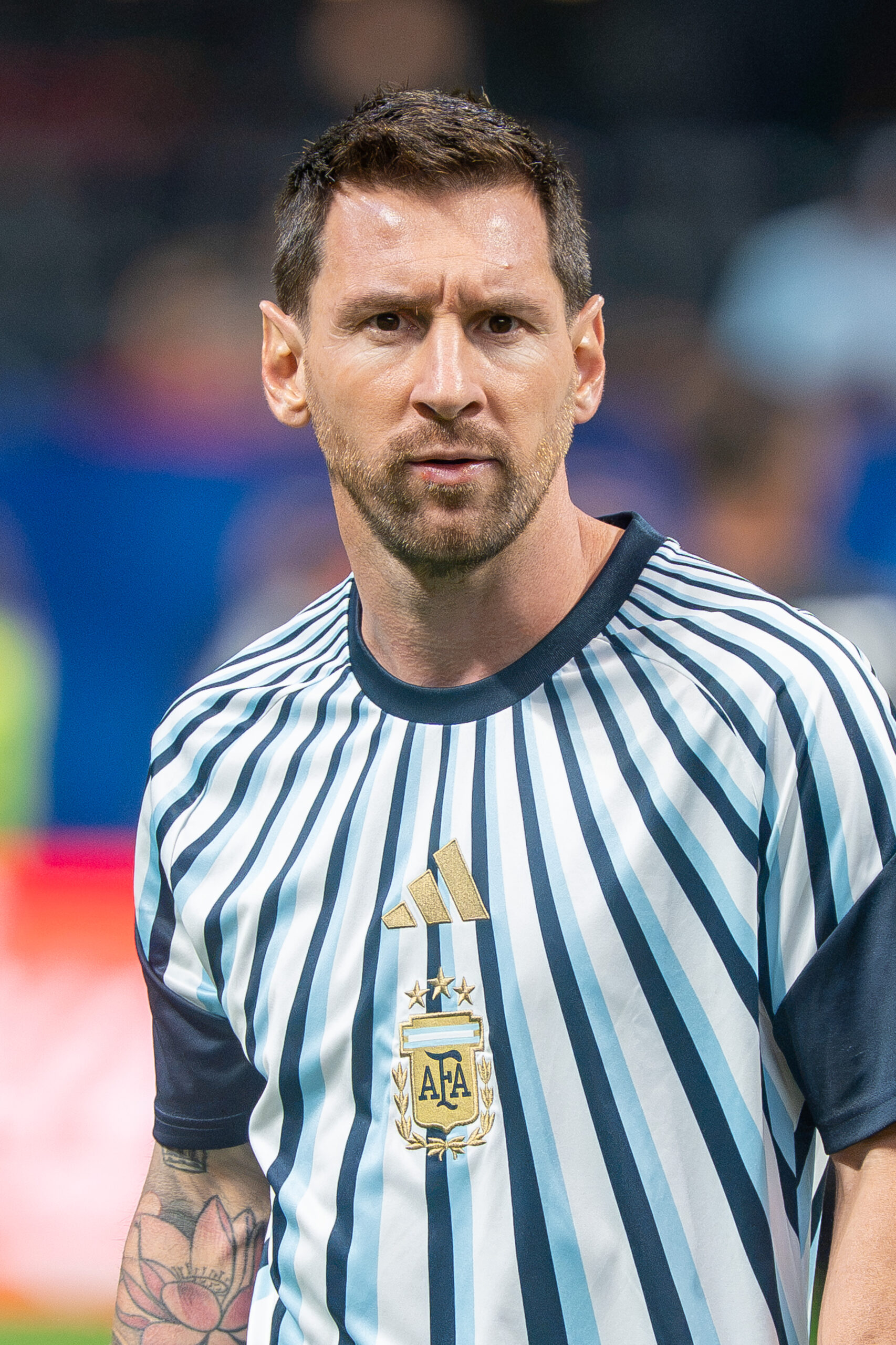
Messi’s Farewell Match: Argentina 3-0 Benin
The farewell was a friendly played at the Estadio Monumental in Buenos Aires, with more than 85,000 fans in attendance, according to US media reports. Tickets that were originally priced between $60 and $300 were reportedly being resold for more than $2,500, a sign of just how much demand there was to see Messi in the sky-blue and white stripes one last time.
Argentina won 3-0, and Messi was involved in every goal. Nicolás Otamendi opened the scoring in the 48th minute from an outswinging corner delivered by Messi. Nico Paz made it 2-0 in the 61st minute, again with an assist from the captain. And around the 70th minute, Messi himself converted a penalty, awarded after Agustín Giay was fouled, to complete the scoring. Match reports differ slightly on whether the penalty went in at 70 or 71 minutes, but they agree on the contributions: one goal and two assists in his final international appearance.
The Retirement Announcement
The decision to retire from international football was announced by Messi himself on Instagram on August 31, 2026, a few weeks after Argentina lost the World Cup final. At the time he was 39. In his statement, he described the decision as “a decision that hurt and still hurts deep in my soul but I understand that it is the right time”, according to reports from the time.
The announcement followed Argentina’s second straight World Cup final appearance. In the 2026 tournament final, Argentina lost 1-0 to Spain at MetLife Stadium in East Rutherford, New Jersey. Messi had a strong tournament, with eight goals and two assists, including involvement in a late semi-final comeback against England. After the final, he was pictured in tears and said the defeat would take a long time to heal.
Two World Cup Finals in a Row
It is a measure of Argentina’s consistency under Messi that the team reached two consecutive World Cup finals. The 2022 tournament in Qatar ended with victory over France on penalties, giving Messi the one trophy that had eluded him. The 2026 final ended in defeat, but reaching it at the age of 39 is a remarkable achievement in its own right.
Messi’s International Career in Numbers
Messi made his international debut in 2005, having been called up by coach José Néstor Pekerman at the age of 18. Over the next 21 years, he went on to make 208 appearances for Argentina, scoring 126 goals and providing 67 assists, according to the Sports Mole tally after the Benin match. The 126 goals are a national record.
In terms of silverware, Messi leaves with the 2022 World Cup and two Copa América titles, from 2021 and 2024. He is also an eight-time Ballon d’Or winner. These achievements put him in any conversation about the greatest players in the history of the sport, and the way he finished his career, still captaining his country in a World Cup final at 39, only adds to the legend.
What Happens Next for Messi?
Retirement from international football does not mean the end of Messi’s playing career. He continues at Inter Miami in Major League Soccer, where his contract runs until the end of the 2028 season. Fans in the United States will therefore still get to watch him play regularly, even if Argentina supporters will no longer see him in national colours.
For Argentina, the challenge is to move on from the most successful era in the country’s football history. Players such as Nico Paz, who scored in Messi’s farewell game, represent the next generation, and the team will now have to find its identity without the player who has been its focal point for two decades.
Why Messi’s Retirement Matters Beyond Argentina
Few athletes in any sport have had the global reach that Messi has enjoyed. Indian football fans, like fans around the world, have followed his career closely, whether through World Cups, club football in Europe, or his time in Miami. The end of his international career is therefore a moment that resonates far beyond Argentina.
It also marks the end of a particular rivalry era. For nearly two decades, discussions about the best player in the world revolved around Messi and a small group of contemporaries. With Messi no longer playing for his country, international tournaments will feel different. The next World Cup cycle will be the first in which his name is not on the Argentina team sheet, and the sport will have to adjust to that.
Analysis: A Fitting Farewell
Farewell matches can be awkward. Sometimes the star struggles, the occasion overwhelms the football, or the result is forgotten. This one was different. Messi created the opening goal with a corner, set up the second, and scored the third himself from the penalty spot. It was a match that summarised the elements of his game: vision, delivery and finishing.
It also came after a difficult moment in July, when the World Cup final defeat to Spain left Messi visibly emotional. The farewell in Buenos Aires gave him and the supporters a chance to celebrate on home soil, which is often what players say matters most at the end of a career. The fact that the stadium was packed and that tickets were in such high demand shows the bond between the player and the fans.
Comparisons with other greats will continue, as they always do, but the numbers speak clearly: 126 goals, 67 assists, 208 caps, a World Cup and two Copa América titles. For a generation of fans, Messi’s years in the Argentina shirt were a defining part of their football lives.
Conclusion
Lionel Messi’s international career ended with a 3-0 win over Benin, a goal, two assists and a stadium full of fans who knew they were watching history. After 21 years, 208 caps and 126 goals, Argentina’s captain leaves with a World Cup, two Copa América titles and a place among the greatest to play the game. He will continue to play for Inter Miami, but for Argentina, an era has ended.