
Indian shooting has a new name to celebrate. Neeru Dhanda, a 26-year-old trap shooter from Haryana, won the women’s individual trap event at the Asian Games 2026 in Aichi-Nagoya, becoming the first Indian woman to take gold in the discipline at the continental showpiece. It was a landmark moment for a sport that has produced plenty of medals for India in rifle and pistol events but far fewer in the shotgun disciplines.
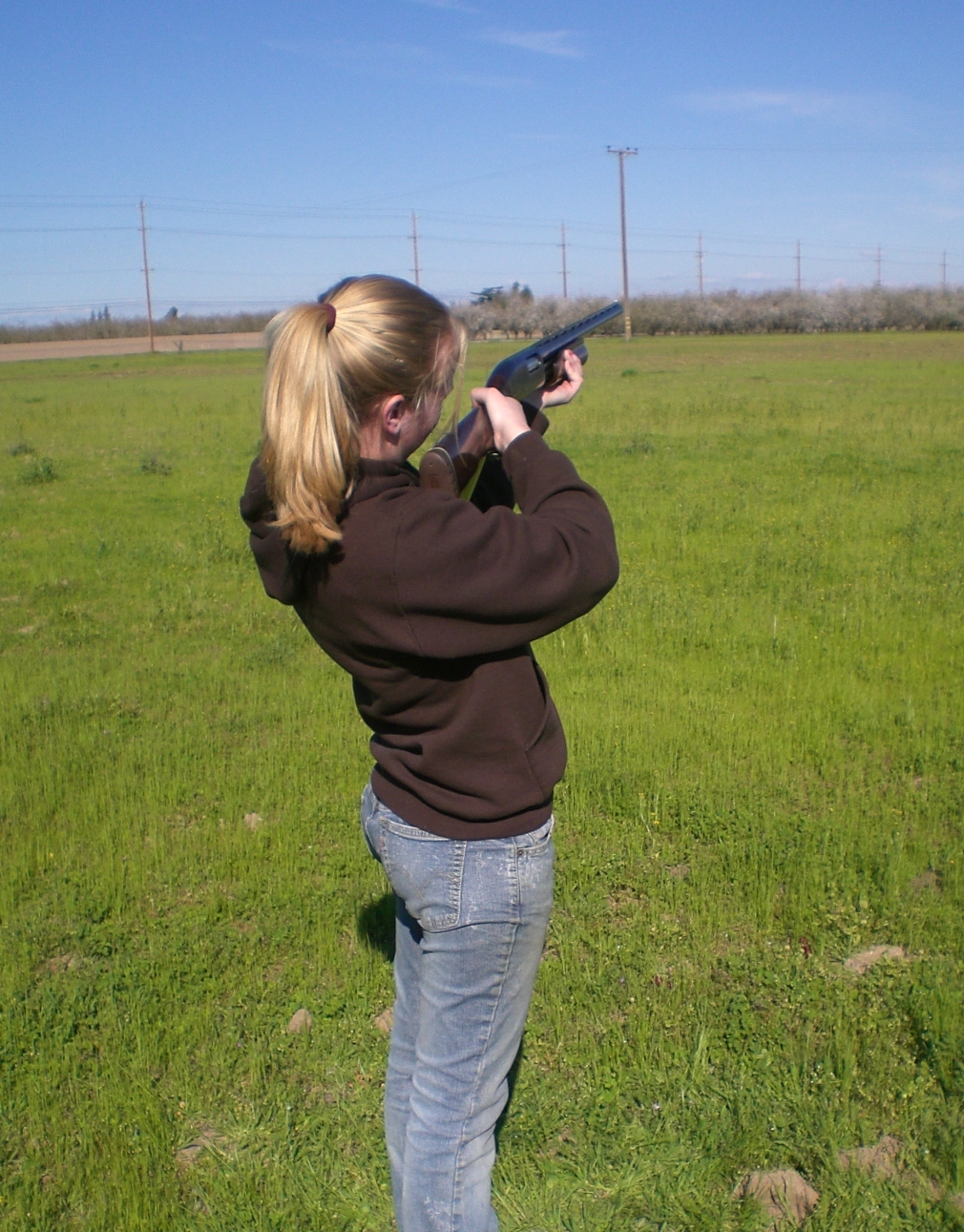
What happened in the women’s trap final
Dhanda scored 28 in the final to take the gold medal on 29 September 2026. According to The Week’s report, that tally was better than the previous Asian record of 24 for a final of this kind, which gives the result a statistical weight on top of its historic value. Different outlets have described the record context in slightly different ways, so the safest summary is simply that 28 was a dominant score in a match where every missed clay is expensive.
Her path to the final was just as impressive. In the qualification round Dhanda tied for the top spot with Qatar’s Ray Bassil on 118, a score reported as a Games qualification record. Heading into the final shoot-out as joint leader meant she carried the pressure of being the favourite, and she handled it. The win was reported as India’s fifth gold of the 2026 Games at that stage, and it came when India sat 11th on the medal table with 47 medals.
Understanding trap shooting
For readers who follow cricket more closely than shooting, trap is a shotgun discipline in which athletes fire at clay targets that are launched away from them at varying angles. Shooters do not know the exact direction of the next target, so reflexes, focus and rhythm matter as much as raw technique. A qualification score such as 118 reflects a long series of consecutive hits under changing conditions, which is why a tie at the top is such a strong platform for a final.
The finals format compresses that pressure into a short shoot-off in which a single miss can be decisive. Scoring 28 in that setting speaks to composure. It also explains why the discipline rewards experience and mental routines, areas where a 26-year-old can already be a veteran of several international seasons.
The team event: silver behind China
Dhanda did not carry the load alone. India’s women’s trap team, made up of Dhanda, Manisha Keer and Aashima Ahlawat, finished second with a combined 328. China won the gold with 346, with Liu Shanshan, Sun Yunong and Zhu Jingyu in their line-up, while Kuwait took bronze with 325. A silver medal behind a powerhouse such as China is a strong result, and the three-point gap to Kuwait shows how tight the battle for the podium was.
In the individual event, Ahlawat finished 16th and Keer 23rd, so neither reached the final. That is a reminder of how brutal qualification is in trap, where even strong shooters can miss out on the medal round by a handful of targets. Dhanda’s ability to stay at the top of the standings across the qualification rounds is what separated her from the field.
The men’s side and the wider picture
The Indian men’s trap team of Shapath Bharadwaj, Kynan Chenai and Ahvar Rizvi finished sixth among ten teams with 339. Kuwait won gold with 355, Qatar took silver with 349 and Kazakhstan took bronze with 348. Bharadwaj, a 24-year-old from Meerut, did reach the individual final in eighth place after a shoot-off, edging out Mohammed Al-Rumaihi, which shows there is individual talent on the men’s side even if the team result fell short.
A mixed team gold with Kynan Chenai
Dhanda’s week was not finished with the individual title. Teaming up with Kynan Chenai in the mixed trap team event on 30 September, she helped India to another gold with a score of 34 out of 40. Outlook India described that result as an Asian and Games record. Together with her individual title, it made her a double gold medallist in shooting at these Games, a rare haul for any Indian shotgun athlete.
Background: a rise that did not start in Nagoya
This was not a bolt from the blue. In July 2026, Dhanda became the first Indian woman to win a trap gold at an ISSF World Cup, in Italy. That was her first individual World Cup medal and only her second medal overall in her career, so her trajectory has been steep. The Asian Games gold two months later suggests that the World Cup win was a genuine breakthrough rather than a one-off peak.
The history behind the result adds to its significance. The last Indian individual trap gold at the Asian Games came in 1978, when Randhir Singh won the men’s event in Bangkok. In other words, India had waited decades for a trap champion at this level, and Dhanda is the first woman to end that wait in the individual event.
Analysis: why this gold matters for Indian shooting
India’s shooting reputation has historically been built on rifle and pistol events. Shotgun disciplines such as trap and skeet have traditionally been tougher territory, with deep fields in China, Kuwait, Qatar and Kazakhstan. A gold medal in a discipline with that kind of competition tells selectors and federations that investment in shotgun training pipelines can yield results at the highest continental level.
It also improves the outlook for the mixed team formats, which reward pairs who can be consistent together. Dhanda and Chenai’s record-reported score of 34 out of 40 is an encouraging sign for future events that feature a mixed trap category. Whether that translates into more medals will depend on how well India can keep its shooters in form through the next international calendar, but the template is clearly there.
India’s overall Games campaign
Dhanda’s medals arrived in the middle of a very productive campaign. India finished the Aichi-Nagoya Games fourth on the overall medal table with 85 medals, made up of 21 gold, 27 silver and 37 bronze. Shooting contributed prominently to that total, including a mixed 10m air pistol team gold earlier in the Games for Suruchi Singh and Kamaljeet Singh with 484.6, which was also described as an Asian record.
What’s next
After the high of Nagoya, the focus for Dhanda and her teammates will turn back to the international circuit, where World Cup events and further qualification competitions will test whether the form carries over. For the federation, the challenge is to build depth behind her so that the women’s trap team can convert silver into gold in the next cycle and so that the men’s side climbs from sixth place.
Key numbers at a glance
For quick reference, the main figures from the event are these: Dhanda scored 28 in the final; she shot 118 in qualification to tie for first; the women’s team scored 328 for silver behind China’s 346 and ahead of Kuwait’s 325; and the men’s team scored 339 to finish sixth of ten. In the mixed trap team event, Dhanda and Chenai scored 34 out of 40 for gold. Taken together, these numbers show one athlete performing far above the rest of the Indian squad on the day, which is both a compliment to her and a reminder of how much depth the team still has to build.
Why shotgun medals are harder to come by
Trap shooters rely on reading flight paths of targets they cannot predict, and the sport demands access to ranges, ammunition and regular competition against strong opponents. Those resources are costly, which helps explain why success in shotgun events has been slower to arrive for India than in some other shooting disciplines. Seen through that lens, a gold medal from a 26-year-old who has also won a World Cup title this year suggests that the support structure around the squad is working. Continued investment will determine whether she remains an exception or becomes the first of several champions.
Conclusion
Neeru Dhanda’s gold is the kind of result that changes how a discipline is perceived at home. A 28 in the final, a joint-top qualification score of 118, a team silver and a mixed team gold added up to one of the standout individual performances of India’s Asian Games 2026 campaign. For Indian trap shooting, it is both a long-awaited breakthrough and a promise that more may follow.