
Kabaddi remains one of the sports in which India expects to win gold, and at the Asian Games 2026 both of its national teams delivered on that expectation on the same day. On Saturday, 26 September, the Indian women’s team beat Iran 37-34 and the men’s team followed with a 40-34 win over the same opponents, completing a golden double in Aichi-Nagoya. Both finals were tight, physical and decided late, which is exactly why Iran has become the rival India respects most in the sport.
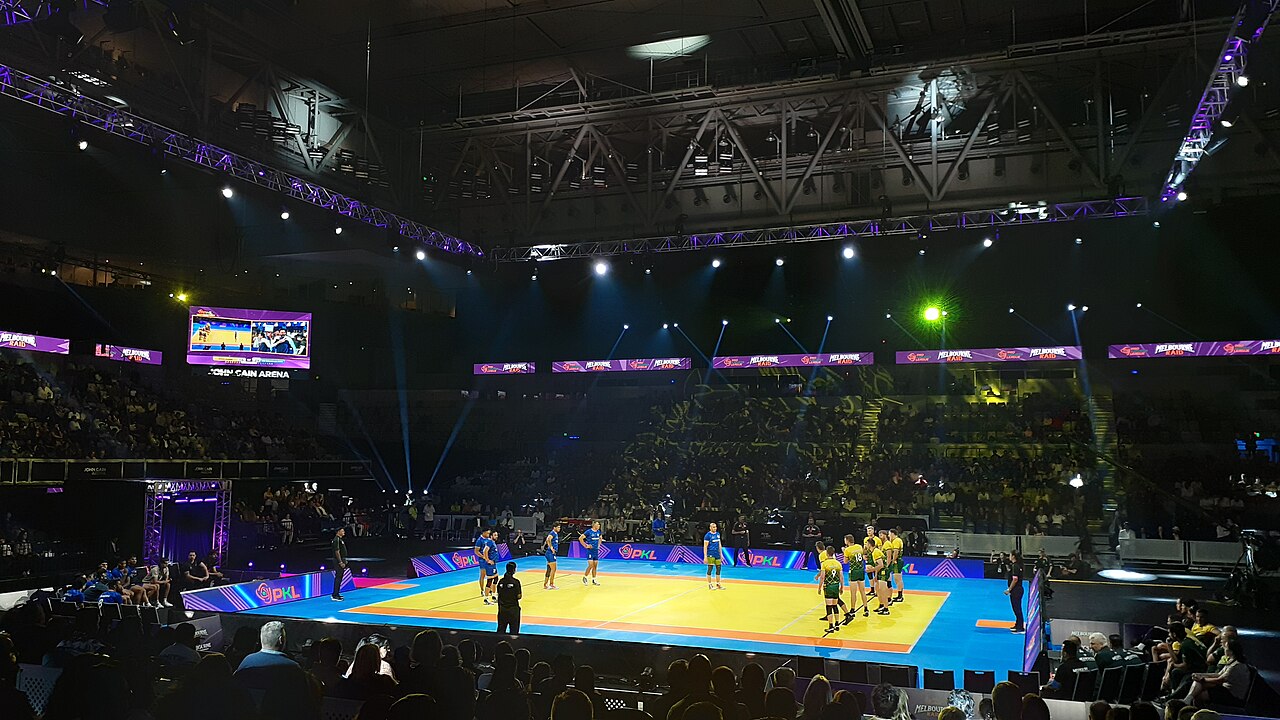
The women’s final: India 37, Iran 34
The women went first and set the tone. India led 22-16 at half-time, giving them a cushion that proved essential. Iran fought back in the second half, outscoring India 18-15 over the closing period, but they never managed to take the lead and India held on for the three-point win.
The result carries extra meaning because of history. India had won every edition of the women’s Asian Games kabaddi event except 2018, when Iran beat them and India took silver. This gold was therefore a return to the usual order of things, and it was reported as India’s fourth women’s kabaddi gold at the Games and the third gold for the Indian contingent at the 2026 edition at that point. The Week also noted that the Iranian women’s squad had only one player from their previous Asian Games team, which suggests a younger group that still pushed India all the way.
The men’s final: India 40, Iran 34
The men’s final at the Tokai Citizen Gymnasium was a closer contest for much of its length. Reports differ on the exact flow of the first half. One account has Iran leading 18-17 at half-time after an all-out on the defending champions, while another describes the scores being level at 20-20 at one point before India pulled ahead. What is consistent across the reports is that India found the decisive momentum in the second half.
According to the Morung Express report, a tackle by Rahul and an all-out lifted India to a 29-24 lead, and the defensive work of Sumit, particularly his thigh tackles, was credited as a key factor in closing out the game. India eventually won 40-34. It was the ninth Asian Games men’s kabaddi gold in India’s history, a record, and the fourth gold of the Games for the Indian contingent. Head coach Balwan Singh was pictured celebrating with the team after the win.
How kabaddi finals are usually won
For readers less familiar with the sport, kabaddi is a contest of raids and tackles. A raider enters the opposing half, tries to touch defenders and return safely, while the defenders try to hold him until he runs out of breath. An all-out, in which one side eliminates every member of the other, is worth bonus points and often swings the match. That is why a single all-out, like the one that gave India their 29-24 lead, can change the story of a final within a couple of minutes.
India’s history in Asian Games kabaddi
India’s record in the sport at this level is formidable. The men won seven consecutive Asian Games golds before the streak ended at Jakarta in 2018, where Iran took the title. India regained it at Hangzhou in 2023, and the 2026 win in Nagoya makes it the ninth gold overall. The women’s team has followed a similar pattern, winning every edition except 2018.
That 2018 setback is worth remembering because it shaped how India approaches Iran. Since then, the rivalry has been the defining one in Asian kabaddi, with both teams building squads and tactics around the possibility of meeting in the final. Beating Iran in both finals on the same day at the 2026 Games suggests India has solved that puzzle again, at least for this cycle.
Analysis: why both finals were so close
Margins of three points and six points in kabaddi are not large. A handful of successful raids or a single all-out can account for the difference. In both finals, Iran stayed within reach until late, which tells us the gap between the top two teams in Asian kabaddi remains small. India’s advantage seems to lie in squad depth and in the ability to produce a decisive burst, such as the second-half surge in the men’s match, when it matters.
The women’s match shows another side of that advantage. Leading 22-16 at half-time, India had built a lead that Iran could only chip away at. Even though Iran won the second half 18-15, the first-half cushion decided the match. That is a pattern that coaches will want to repeat: start strongly, build a buffer and manage the closing stretch carefully.
Part of a strong Games for India
The kabaddi golds were part of a very productive Asian Games for Indian sport. India eventually finished fourth on the overall medal table with 85 medals, made up of 21 gold, 27 silver and 37 bronze. The women’s cricket team had opened India’s gold account on 22 September, and the kabaddi wins on 26 September pushed the total up further before archery, shooting, athletics, hockey and other disciplines added to it.
What’s next for Indian kabaddi
With the Asian Games complete, attention in Indian kabaddi turns to the domestic calendar. A Khel Now report from August said the Pro Kabaddi League’s 13th season was likely to start in late December 2026, with a player auction expected in mid-October, although there had been no official confirmation of the dates at the time of that report. If those plans hold, the Asian Games gold medallists will be among the most sought-after names heading into the new season.
For the national teams, the aim will be to keep the standard high. The rivalry with Iran is unlikely to fade, and every new tournament will bring fresh tests as other Asian nations invest in the sport. The 2026 double gives both Indian squads confidence, but the narrow scorelines are a reminder that the margin for error is thin.
The scores at a glance
Both finals were played on Saturday, 26 September 2026, and both ended with India on top. The women won 37-34 after leading 22-16 at half-time, and the men won 40-34 in a match where India led 29-24 at one stage in the second half. The three-point and six-point margins are small by the standards of a sport that can produce high scores, and they underline how tightly contested Asian kabaddi has become at the very top.
Why the rivalry with Iran matters
Iran took the men’s title in 2018 and also beat India’s women that year, which is why the rivalry has had an edge ever since. Playing Iran in both finals gave India the chance to settle that account twice in a single day. For supporters, there is something satisfying about seeing the same opponent beaten by both squads, and for the players, it was a chance to show that the lessons of 2018 had been learned. Whether that dominance continues will depend on how well India and Iran keep refreshing their squads.
Conclusion
India’s golden double in kabaddi at the Asian Games 2026 reaffirmed the country’s place at the top of the sport. The women’s 37-34 win and the men’s 40-34 win, both against Iran, were tense and well-earned, and the men’s ninth gold set a new record. For Indian fans, it was a reminder of why kabaddi is one of the country’s most reliable medal sports, and for the players, a proud moment on a big stage.