
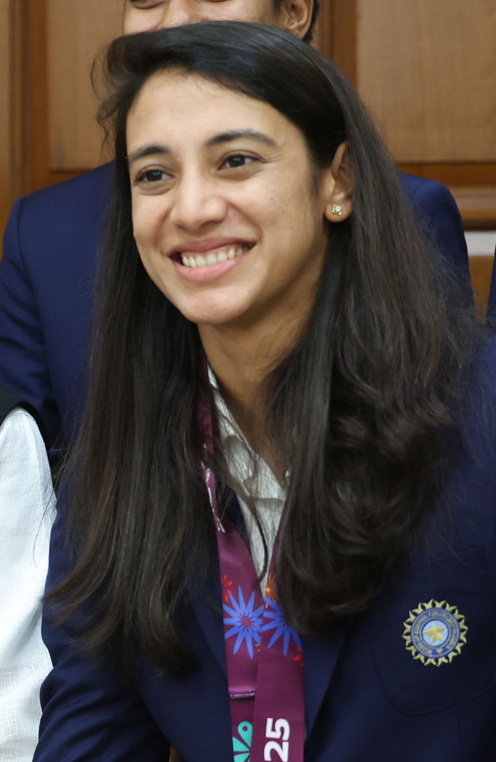
Indian women’s cricket has a new leader. The Board of Control for Cricket in India (BCCI) announced on October 6, 2026 that Smriti Mandhana has been appointed captain of the Indian women’s team across all formats, taking over from Harmanpreet Kaur after her resignation. For a batter who has been a fixture of the national setup since 2013, the appointment is both a recognition of long service and the start of a very different kind of responsibility.
What the BCCI announced
According to reports on the announcement, the BCCI named Mandhana as the full-time, all-format skipper of the Indian women’s side following Harmanpreet Kaur’s decision to step down. The board’s statement described Mandhana as one of the leading figures in Indian women’s cricket over the years and noted that she has played a key role in the team’s progress across formats. BCCI President Mithun Manhas said her experience and understanding of the game would be valuable as she takes on the role, adding that the board has full confidence in her.
Mandhana is 29. She made her international debut in 2013 and, before this appointment, had already captained India in 18 T20Is and four ODIs, usually when Harmanpreet was unavailable. That stand-in experience matters, because it means the new captain is not stepping into the job cold: she has already made tactical decisions on the field, handled the toss, managed bowling changes and faced the post-match questions that come with the armband.
Mandhana’s own words
Reports quote Mandhana as saying that being given the responsibility of leading India is a very special honour, and that representing the country has always meant a great deal to her. She also said she understands the responsibility that comes with the role and looks forward to working with the team, learning along the way and giving her best to take Indian cricket forward. Her tone was measured rather than triumphant, which fits a player who has built her reputation on calm, classical batting rather than bravado.
She also paid tribute to her predecessor, saying Harmanpreet led the team with great commitment and has been an important part of the group’s journey. Given that the two have shared a dressing room for more than a decade, that acknowledgement is likely to reassure supporters that the handover is a respectful one rather than a rupture.
Background: the end of the Harmanpreet era
The change at the top follows Harmanpreet Kaur’s decision to step down as captain in all formats. As we reported earlier this week, the 37-year-old’s leadership era in T20Is stretched across roughly 14 years and included India’s historic 2025 ODI World Cup title. Whatever the manner of her exit, that trophy will remain the defining achievement of her captaincy, and the standard against which any successor will inevitably be measured.
Succeeding a captain who has just delivered a World Cup is a double-edged assignment. On one hand, Mandhana inherits a squad that knows how to win big tournaments and a pipeline of talent that has deepened considerably. On the other, expectations are now far higher than they were a few years ago, and any dip in results will be judged against a title-winning benchmark.
Why Mandhana was the natural choice
Experience of leading India
The raw numbers of her stand-in captaincy, 18 T20Is and four ODIs, give selectors a meaningful sample to judge from. Leading a national side in that many matches is a far larger body of evidence than most first-time captains bring, and it allowed the board to see how she handles pressure before committing to a long-term appointment.
Success in franchise cricket
Mandhana also captains Royal Challengers Bengaluru in the Women’s Premier League, where reports credit her with leading the franchise to the title in both 2024 and 2026. Winning the WPL twice in three seasons is a notable record in a competition where every side is stocked with international talent, and it suggests she can manage a dressing room of strong personalities, a skill that translates directly to the national job.
Her standing as a batter
Perhaps most importantly, Mandhana leads by example. She is among the finest left-handed batters in women’s cricket, and a captain who is also a consistent run-scorer commands a different kind of authority in the dressing room. The challenge, as with every batter-captain, will be protecting her own form while carrying the added workload of leadership.
First assignment: Zimbabwe at home
Reports indicate that Mandhana’s first assignment as full-time captain will be the home series against Zimbabwe. According to the schedule reported by The Bridge, Zimbabwe’s women will tour India for three T20Is and three ODIs in October 2026. The T20Is are set for Raipur on October 16, 18 and 20, with the ODIs to follow in Baroda on October 23, 25 and 28. The series is being described as the first bilateral meeting between the two nations in international cricket, and the ODI leg forms part of the ICC Women’s Championship 2025-29 cycle.
On paper, it is a gentle introduction. Zimbabwe are an expanding side with limited experience against top-tier opposition, which gives the new captain room to settle into the role, experiment with combinations and build her own tactical identity without the pressure of a marquee contest. Because the ODIs carry Championship points, however, India cannot afford to treat the tour casually.
Analysis: what changes under Mandhana?
It would be premature to predict sweeping tactical changes. The same core of players that lifted the 2025 World Cup remains available, and continuity is likely to be the dominant theme of the early months. Where a difference may emerge is in style: Mandhana’s captaincy has so far been described as calm and understated, which may suit a group that has just come through a period of significant transition.
Several practical questions will shape how the new era is judged. The first is leadership structure: how the captain, coach and selectors share responsibility, and who is chosen to support Mandhana in the leadership group. The second is succession planning: with a World Cup-winning generation now in its thirties, the team will need to blend experience with younger talent over the next cycle. The third is workload management, since a captain who also opens the batting must balance the demands of both roles across a busy calendar.
None of these questions is unusual, and none suggests a team in trouble. They are simply the normal agenda of any captaincy handover, magnified by the fact that the previous captain has just delivered the sport’s biggest prize in India’s women’s game.
What it means for Indian women’s cricket
The wider significance is that Indian women’s cricket now has a visible, stable succession plan rather than an abrupt vacuum. Appointing a leader who already has international and franchise captaincy experience, and who is a well-established star, signals continuity at a moment when the team’s profile has never been higher. The growth of the Women’s Premier League, the World Cup triumph and rising domestic viewership all mean the new captain will lead in an environment of greater attention than any of her predecessors.
For young players across the country, the appointment is also a reminder that the pathway to leadership runs through consistent performance and patient development. Mandhana debuted in 2013, spent years as one of the team’s senior batters and now takes charge at 29, an age that gives her potentially many years at the helm.
What’s next
The next few weeks will bring the first real indications. Mandhana’s maiden series as full-time captain begins with the T20Is in Raipur from October 16, followed by the ODIs in Baroda later in the month. Supporters will be watching not just the results but the details: the selection of the playing XI, how she uses her bowlers, and the tone she sets in her first press conferences as skipper.
We will keep following the story as further details of the leadership group and squad emerge ahead of the Zimbabwe series.
Conclusion
Smriti Mandhana’s appointment as India’s all-format women’s captain closes one chapter and opens another. She inherits a team fresh from a World Cup title, a respected body of experience as a stand-in skipper and a record of success as a franchise captain. The task now is to translate that résumé into sustained results at the national level, beginning with the home series against Zimbabwe. If her calm, steady approach carries over from the Women’s Premier League to the international arena, Indian women’s cricket looks to be in capable hands.